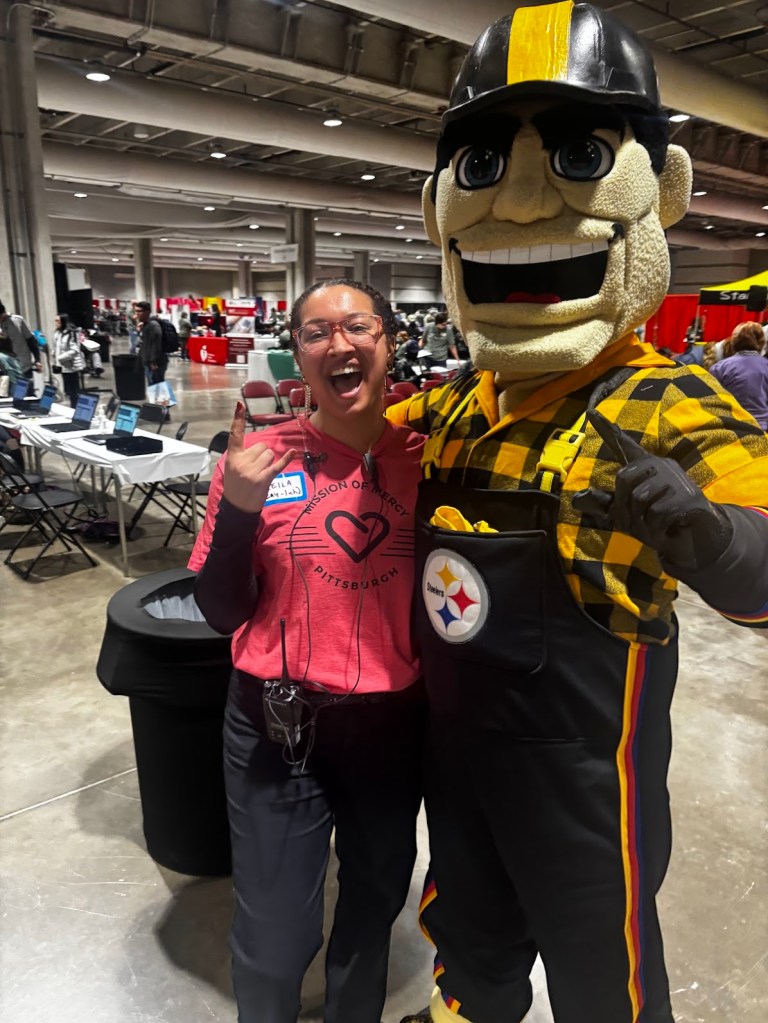
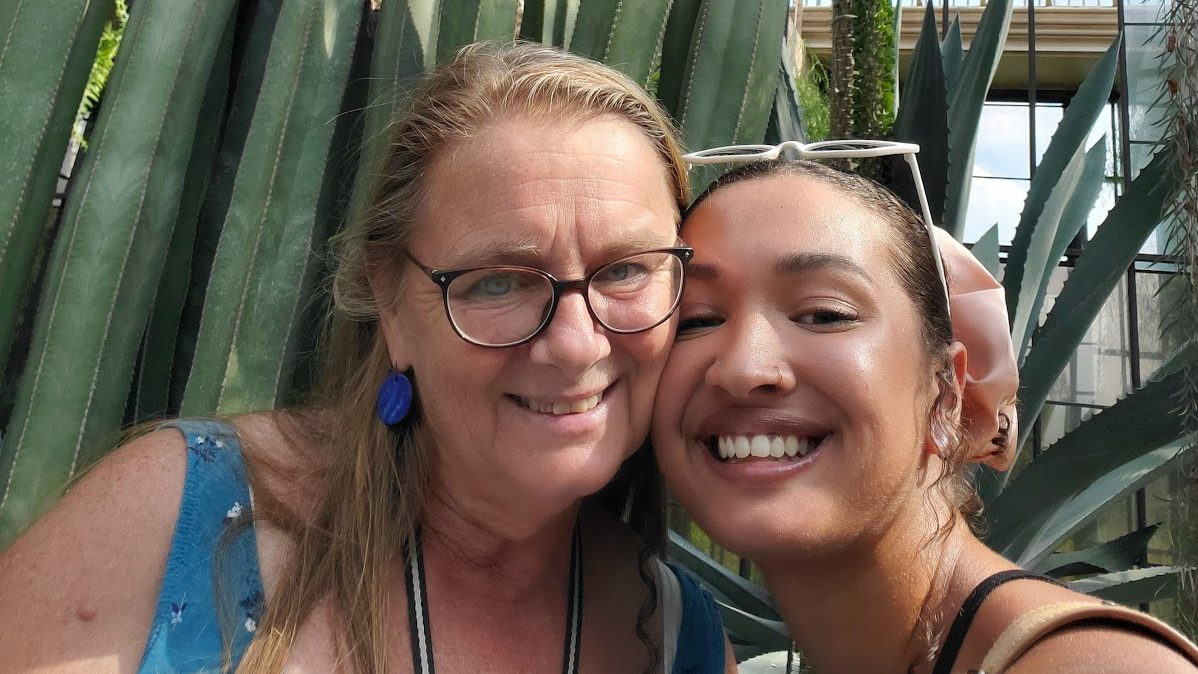
Me and labor movement icon Steely McBeam. 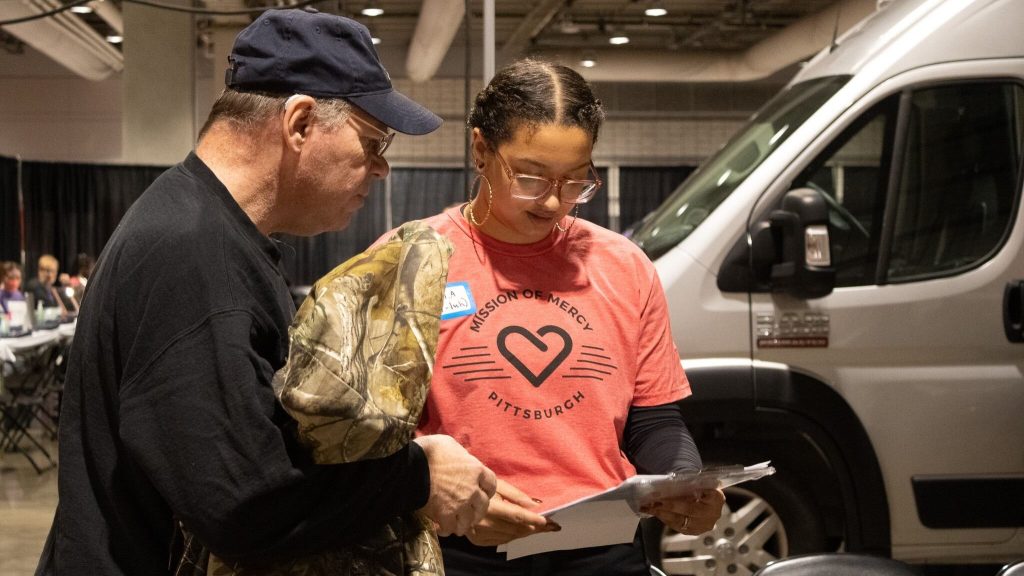
Me helping a patient at Mission of Mercy 2025. 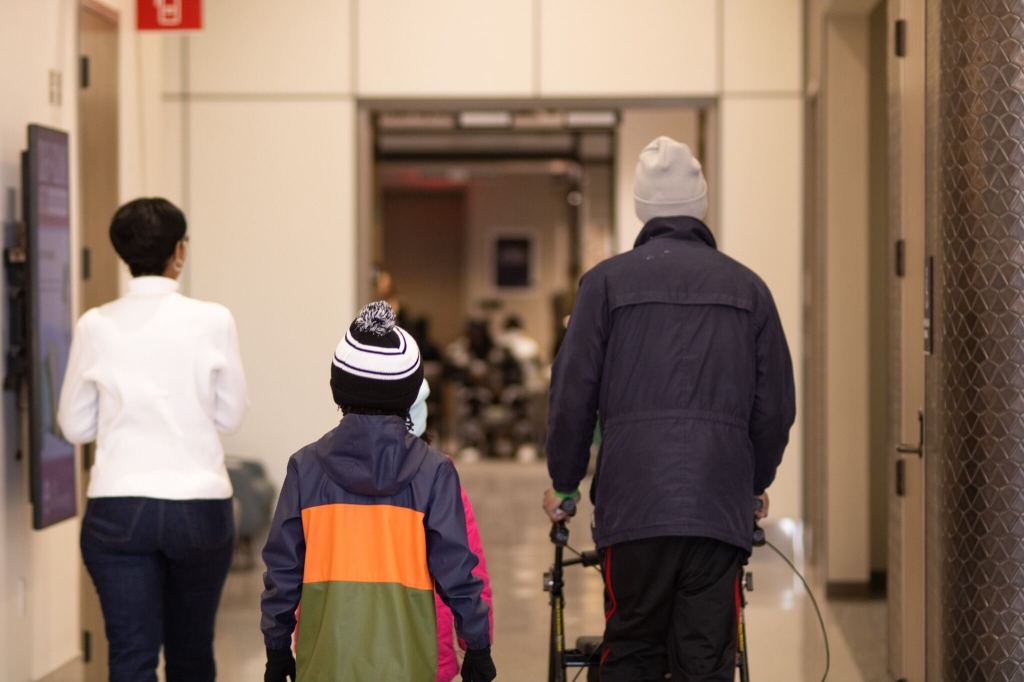
Patients head to their free eye exams at Community Vision Day. 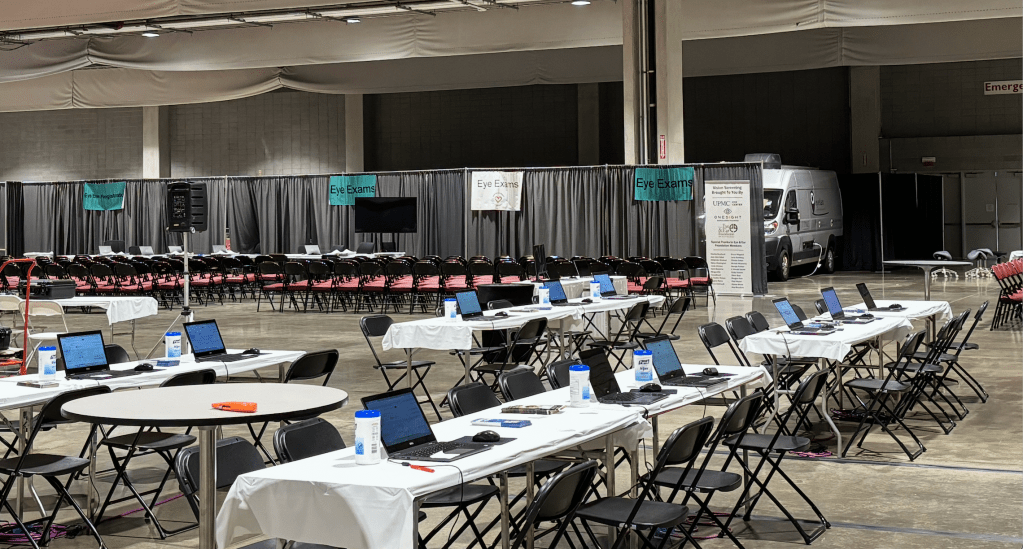
Vision Section Check In at Mission of Mercy 2025. 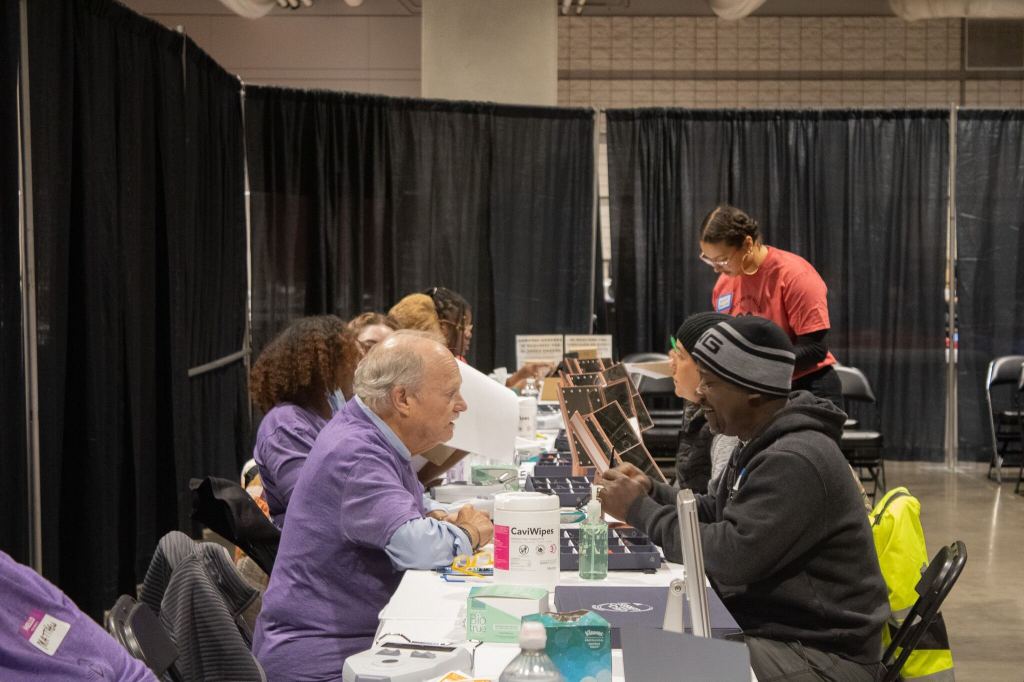
Optical tables at Mission of Mercy 2025. 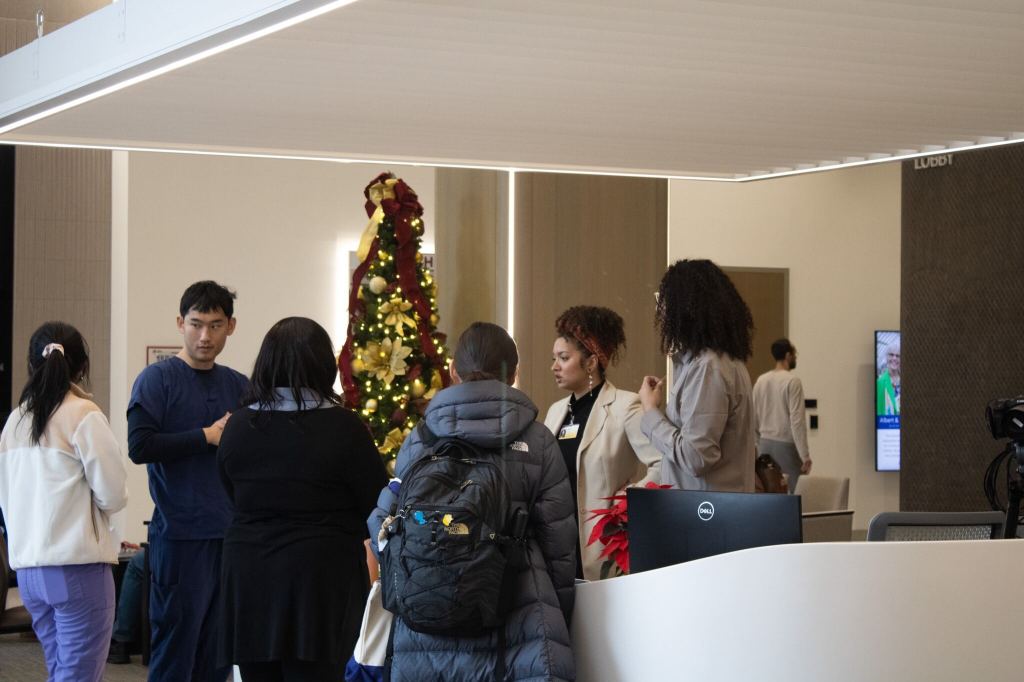
Delegating tasks to Community Vision Day volunteers. 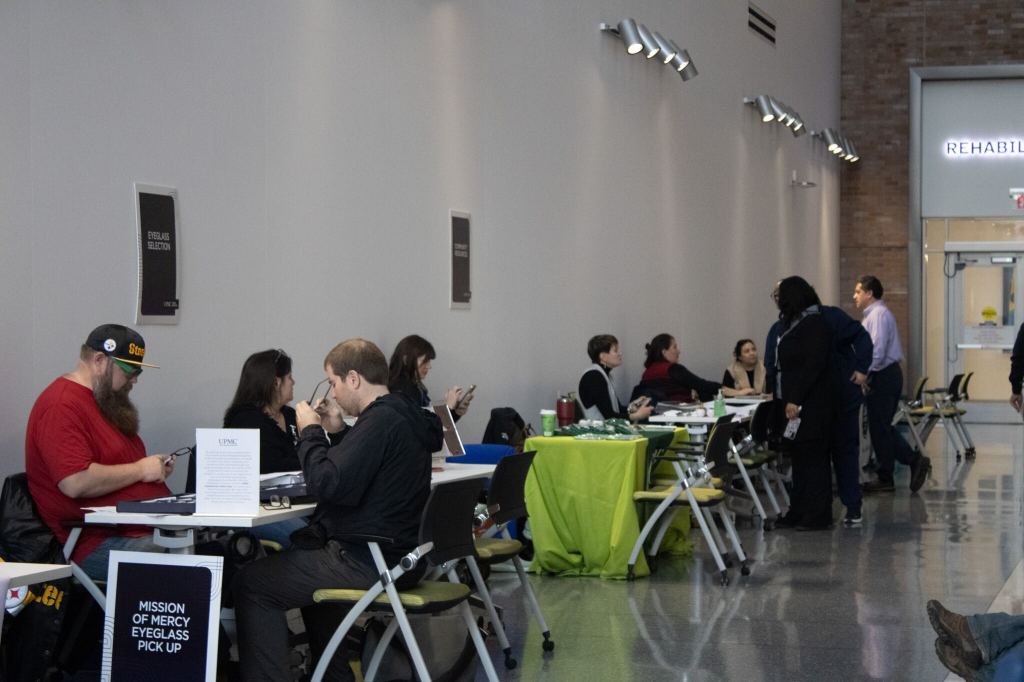
Resource tables for Community Vision Day. 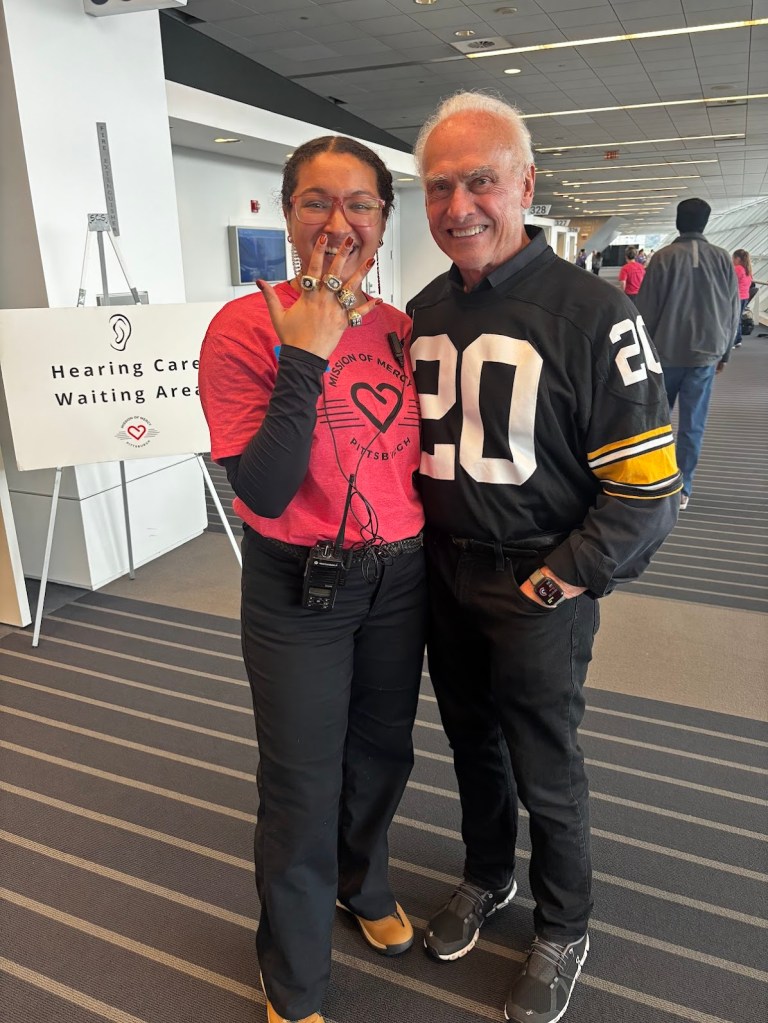
I was stoked to meet Steelers legend Rocky Bleier, who annointed me with his 4 Superbowl Rings.
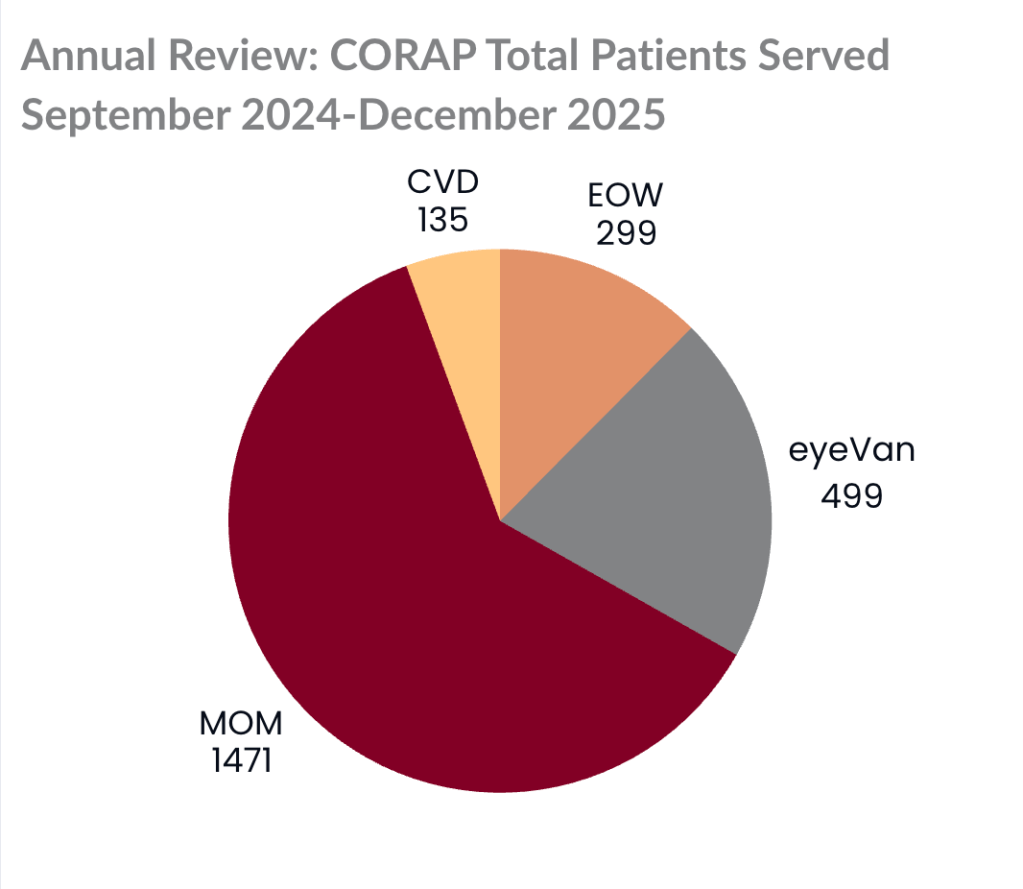
While much of my work involves pop-ups at partner sites catering to 10-20 patients per clinic, the most powerful moments this year came from our large-scale community clinics. These events (hosted at public schools, hospitals, and convention centers) brought over a thousand of our neighbors into direct contact with essential vision services.
Events like Mission of Mercy (dental, vision, and hearing services at no cost) highlight what is possible when health systems, nonprofit partners, and volunteers work together. Patients arrive with a wide range of needs: unaddressed refractive errors, chronic conditions, broken or outdated glasses, or symptoms they’ve been unable to get evaluated for due to personal or systemic barriers. The atmosphere is one of joyful chaos and urgent gratitude. At Mission of Mercy this year (MOM5), my grandmother was able to get a tooth capped after a couple of years of pain. She stuck around to volunteer for the rest of the day, deeply moved by the energy of the mission.
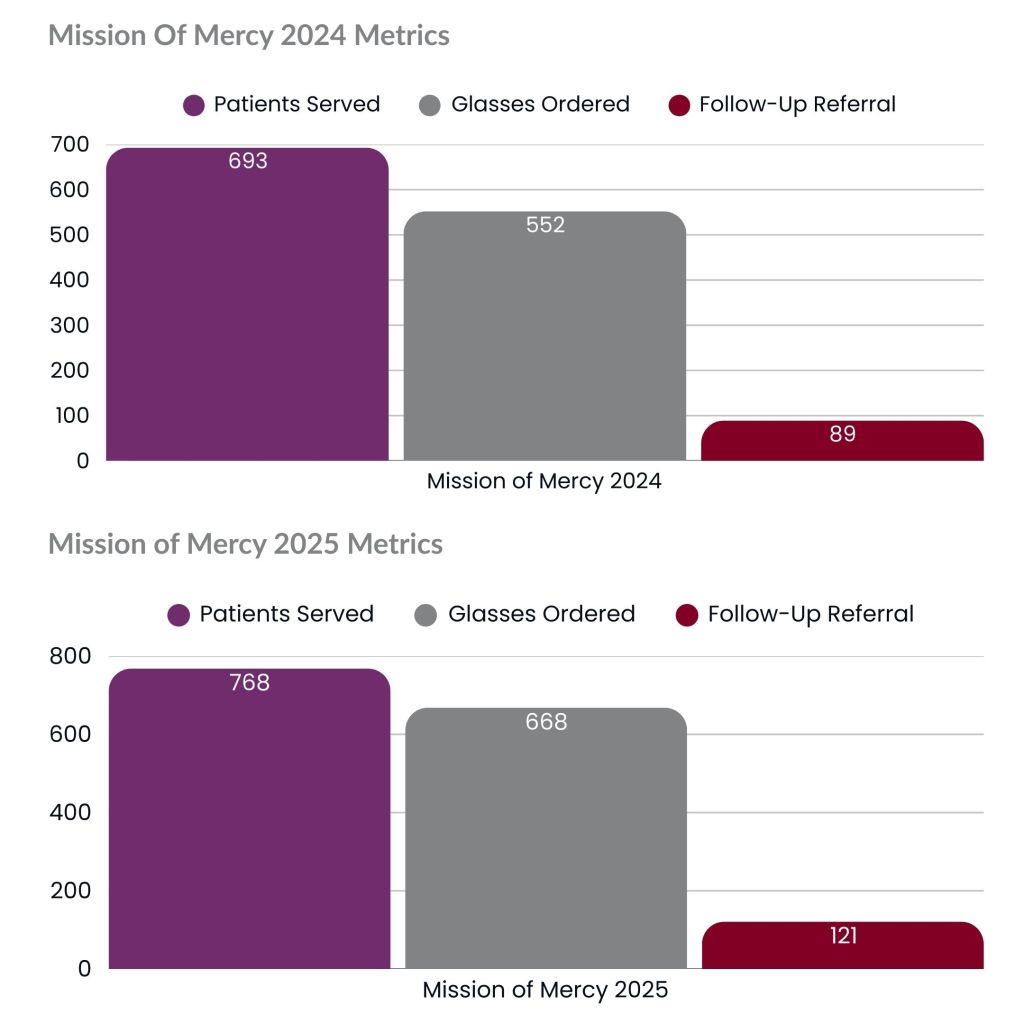
Large clinics are intense. They require weeks of coordination, cross-functional planning, careful staffing, and an ability to adapt quickly in environments that are often crowded, loud, and constantly shifting. They also offer something unique: a chance to meet hundreds of community members at once, without the barriers of transportation, complex scheduling, or traditional clinical structures. In a single day or weekend, we provide screenings, refractions, education, and referral pathways that can dramatically alter someone’s health trajectory. At Mission of Mercy 2025, we served 788 patients; nearly 100 more than last year, thanks workflow improvements implemented by my team, UPMC Community Ophthalmology & Remore Access Program (CORAP).
To facilitate large-scale pop-up clinics, I manage the recruitment and coordination of dozens to hundreds of volunteers, route patient flow, and configure equipment in non-clinical spaces, including equipment delivery logistics and software integrations for Electronic Health Records. I also troubleshoot the many technical and interpersonal issues that arise when hundreds of individuals receive health services in rapid succession, testing the leadership skills I’ve developed as the eldest of 9 siblings, an unapologetically vocal intersectional feminist, and an experienced project lead/event coordinator. I thought my total solar eclipse wedding on April 8, 2024 would be the most difficult event I’d ever plan, but coordinating Mission of Mercy the past two years was even further out of this world.
On the day of a large-scale event, we shift into real-time problem-solving. We respond to bottlenecks, adjust staffing assignments, relocate stations as needed, and ensure that every patient (regardless of clinic pace or volume) receives clear information about their results and next steps. Mission of Mercy 2025 patients were scheduled for follow-ups at the inaugural UPMC Community Vision Day at Mercy Pavilion. 135 patients, including 15 children, received no-cost vision services either by appointment or walk-in. Christened by UPMC CEO Leslie Davis and championed by UPMC Vision Institute Director Dr. Jose-Alain Sahel, UPMC Community Vision Days are scheduled quarterly in 2026 and are the largest low-to-no-cost clinic model ever attempted within the UPMC ecosystem.
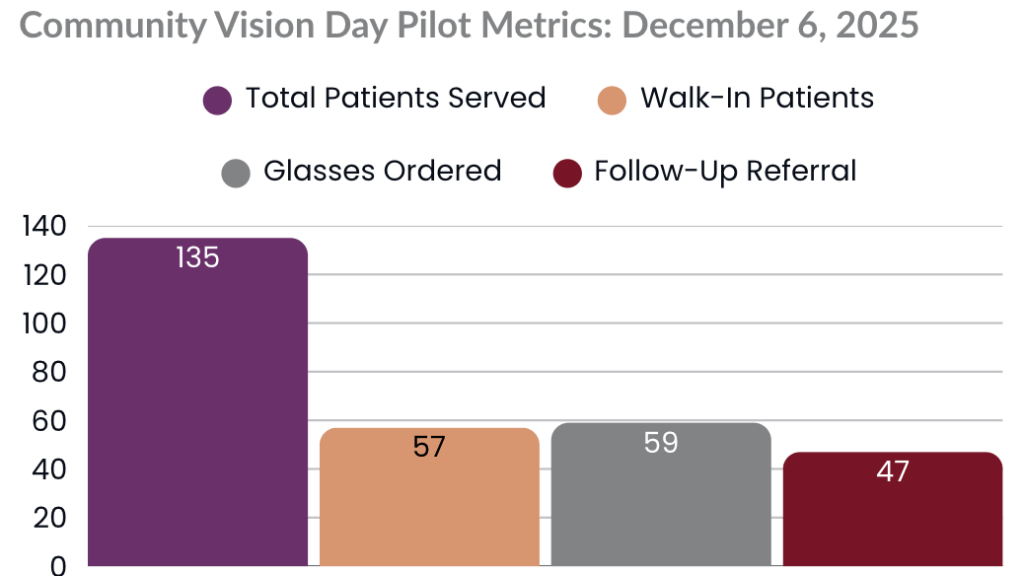
Our events reaffirm why scalable, flexible care models are essential for communities facing persistent access gaps. Last October, CORAP partnered with UPMC Optometry to update prescriptions and order glasses for over 100 students at Washington High School, where 60% of the student body failed their vision screenings the previous year. We’ll be back in October 2026! Further, show up rates for patients referred to Community Vision Day from our mobile clinic programming and MOM25 events were higher than the system average.
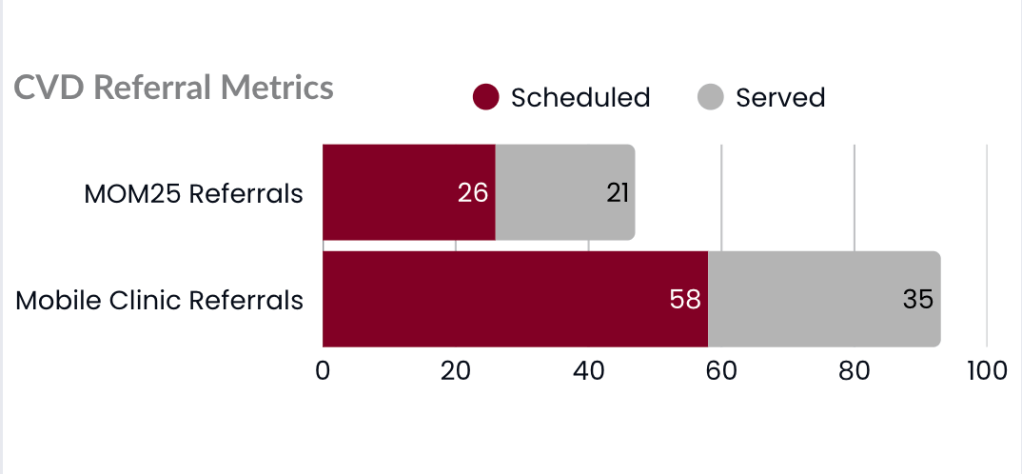
The impact of these clinics cannot be overstated. Many patients have gone years without an eye exam. Some discover conditions that need prompt intervention. Others receive their first updated prescription in over a decade. Every individual we reach with our mobile clinics is an opportunity to produce a ripple effect in their families, workplaces, and communities. Our recurring eyeVan clinic at Abiding Missions in Allentown, scheduled in tandem with their food pantry, came to fruition when one of their volunteers spotted us providing pediatric eye exams at the UPMC Hilltop Family Care Connections clinic in Mt. Oliver and connected me with the community partner she knows and trusts.
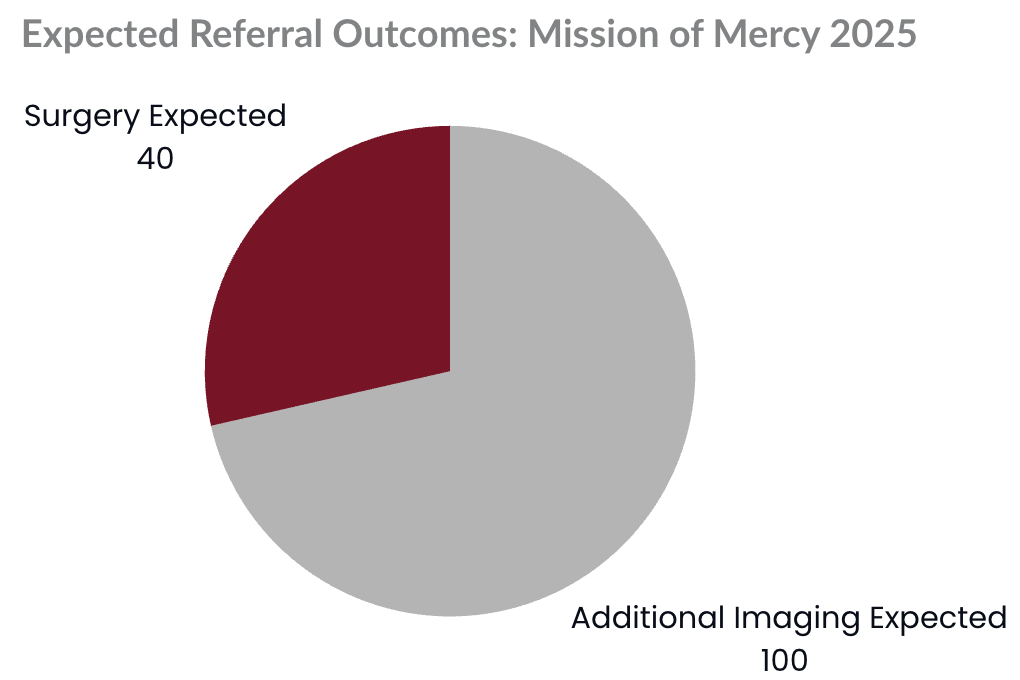
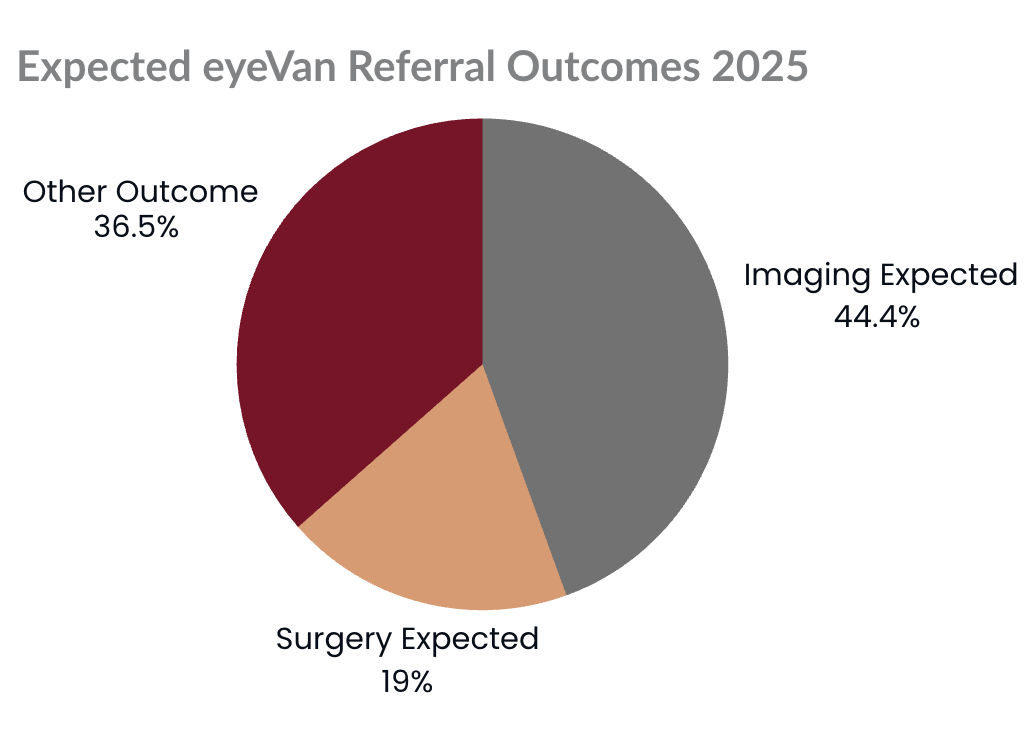
The depth of unmet need across our region is revealed at our large-scale events, reinforcing why mobile and community-based care models matter and exemplifying how much can be achieved when convenient, continued care is made available to our communities. Referrals from eyeVan clinics and Mission of Mercy events have expected imaging and surgical outcomes to prevent degerative eye diseases and manage the progression of developed cases with a referral pipeline to eye specialist regardless of the patients insurance status.

 Portfolio