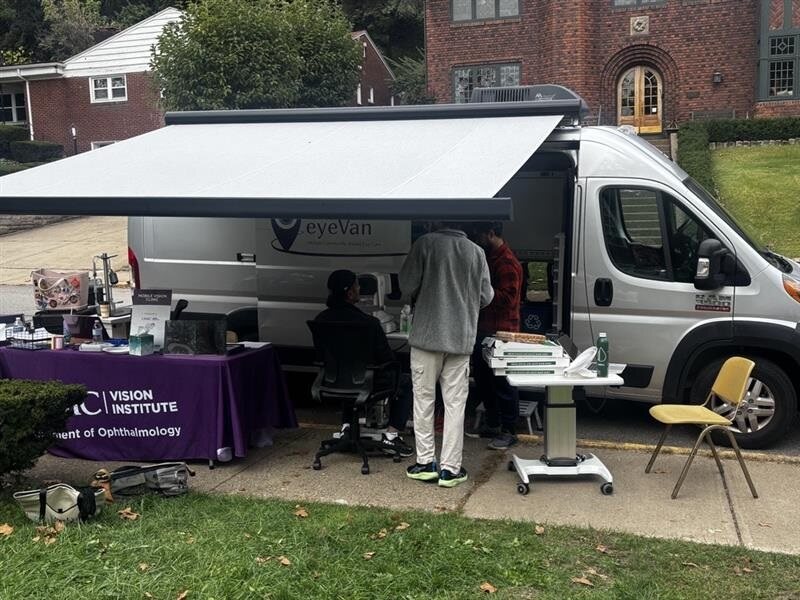
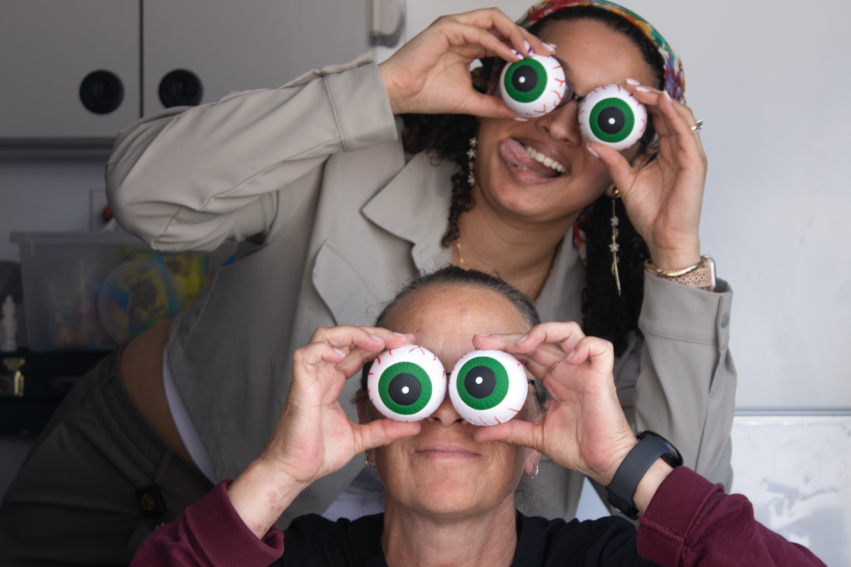
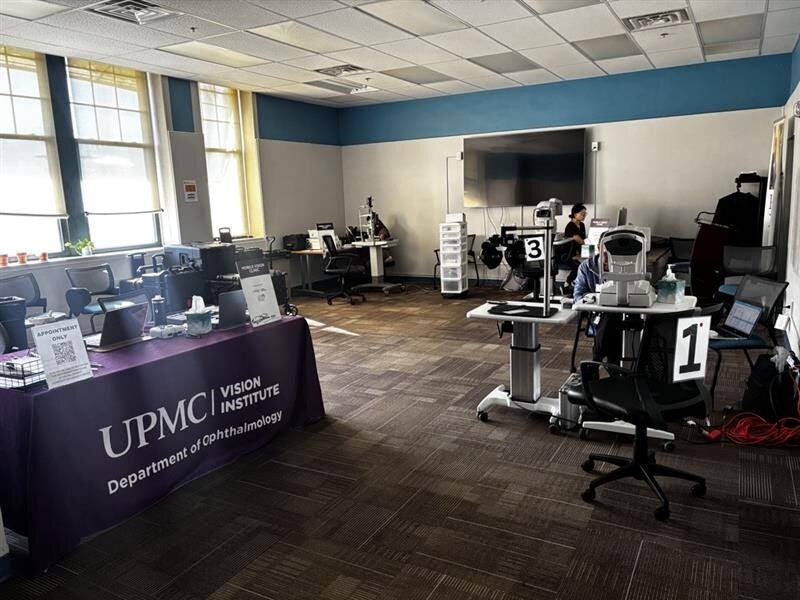
Mobile healthcare may look effortless from the outside; a van arrives, patients come in, and care is delivered. But behind the doors of every successful mobile clinic is a complex choreography of people, equipment, improvisation, and deeply thoughtful planning. Our team also sets up indoor pop-up clinics, hauling equipment in and adapting workflows for every unique, nontraditional clinic space.
This year, leading operations for the eyeVan and our mobile clinic programs showed me what it truly means to turn strategy into community impact. Before we ever park the van, we’re designing care delivery workflows that meet the needs of each partner site and the operations of the UPMC Vision Institute. We’ve developed models for indoor clinics, outdoor setups, and hybrid events, each with unique equipment layouts, patient flow designs, and space constraints. No two days look the same, by necessity. It’s more fun than any job has the right to be. It’s also a workout; we joke that we don’t need gym memberships after a day of building, facilitating, and tearing down pop-up clinics.
On-site, our team of three ( + a volunteer provider) set up everything from the check-in desk to an imaging station and refraction lanes, often transforming a community room, hallway, church basement, parking lot, or multipurpose space into a fully functioning health clinic.
And of course, none of this happens without the literal engine behind our work — the eyeVan itself, our gorgeous four-wheeled chariot donated by the Brother’s Brother Foundation.
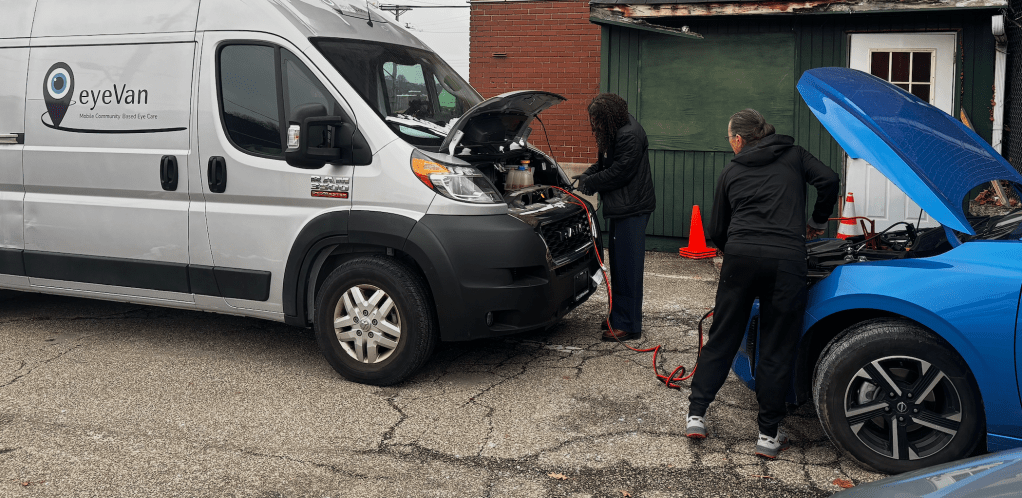
We don’t just prep and staff the clinics; my team drives and maintains the rig to ensure we can safely bring care where it’s needed. True to a rugged life on the road, we’ve overcome our share of unexpected hurdles, like:
- the van battery dying at the worst possible moments
- the generator running out of gas in a parking lot at the height of summer
- equipment requiring troubleshooting and immediate reconfiguration
- weather forcing total layout changes and mild staff discomfort
- overwhelming patient volumes in underserved areas
For me, each challenge becomes a lesson in adaptability and leadership, pushing me to maintain a calm, supportive clinic environment when plans shift. Clinic days are hands-on and heartfelt as I manage patient flow in tight community spaces, support language access, stay sensitive to cultural needs, and coach volunteers. Our team also prioritizes coordinating referrals and follow-up appointments, especially for urgent cases.
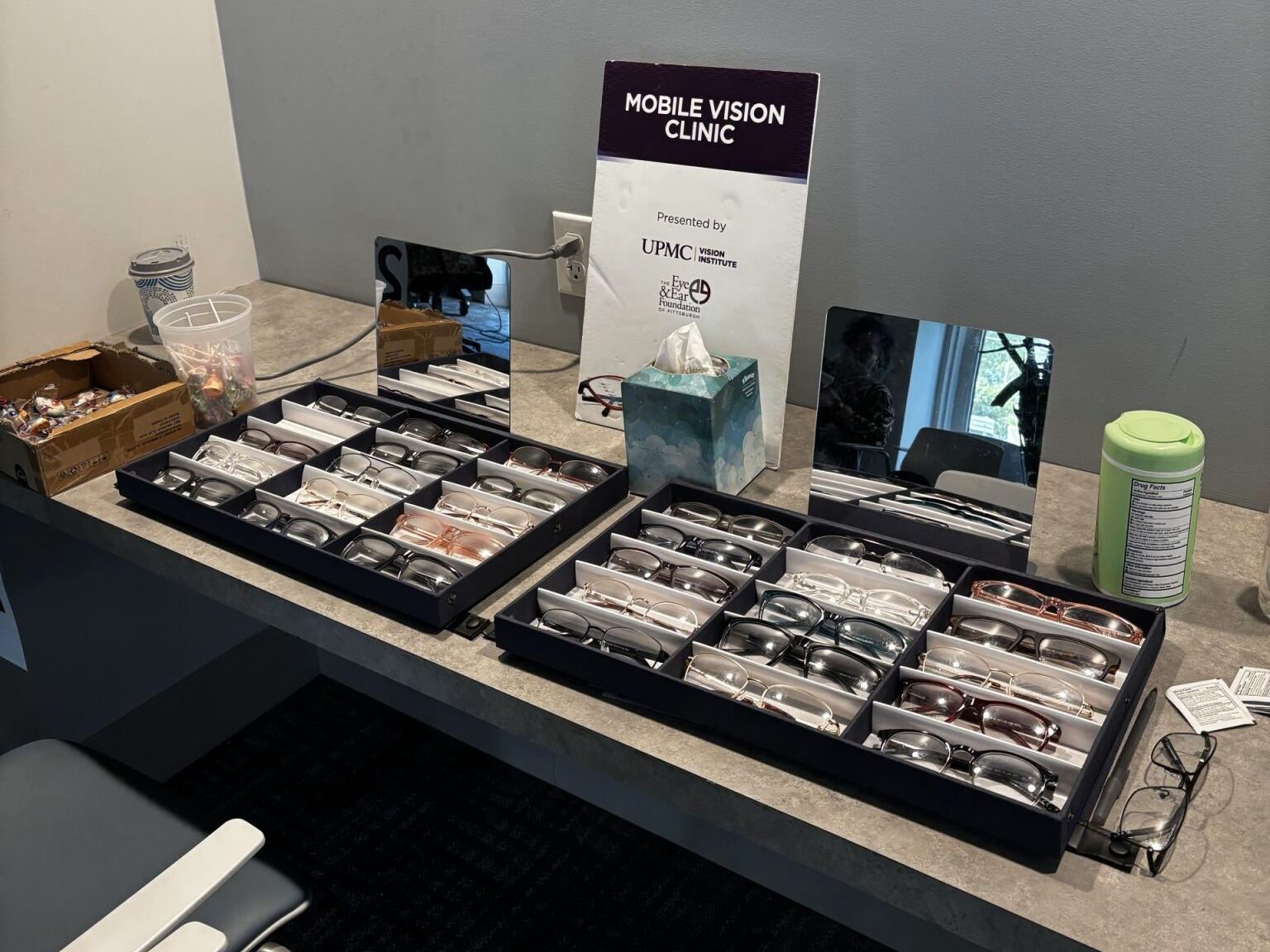
Amid the logistics and problem-solving, there are always moments of impact— a patient smiling at their reflection as they try on a pair of eyeglass frames, a community member expressing relief that someone came to them, a partner asking when they can schedule the next visit… At an assisted living facility in March 2024, a patient was overcome with emotion when thanking us for our on-site presence. She is wheelchair-bound and ecstatic that we can provide her annual exams down the hall from her apartment.
None of this would be possible without the sustained dedication of our team members: our ophthalmic technician with 30+ years of experience, our post-doctoral research fellow and community outreach coordinator, our volunteers, language interpreters, and the partner organizations that know their communities best. Special thanks to our sponsors at the Eye & Ear Foundation of Pittsburgh, Jewish Health Foundation of Pittsburgh, and more for making our dream team a reality; our work stands out in a nonprofit landscape mired with budget restraints and mind-numbing bureaucracy. Mobile vision care is challenging, beautiful, and profoundly collaborative. It demands humility, flexibility, and systems thinking, and it has shaped me into a stronger, more grounded leader than I was in 2024.
Partnering with organizations and facilities throughout the region has also provided the unexpected perk of exploring Pittsburgh; as I navigate the over-engineered road systems and hilly landscapes of Western Pennsylvania, I’m struck by the beauty of every season here. The web of incredible social supports woven through the surrounding counties is also a wonder to behold; I’ve been introduced to charming small businesses and impassioned residents eager to improve Steel City via social programs. I’m networking— not just as a Program Manager shilling UPMC’s philanthropy— but as an activist ready to engage in the civil discourse needed to change systems of oppression from the inside out. As undeniable inflation, escalating ICE raids, and the rapid, technocratic encroachment of data center developments impact Pennsylvania communities, the need for solidarity and community-building backed by institutions like UPMC becomes increasingly obvious.


