Pennsylvania Eye Day is a statewide initiative designed to expand access to preventive eye care, particularly for patients with diabetes who face barriers to completing annual diabetic retinopathy screenings. Missed screenings contribute to delayed diagnosis and preventable vision loss, especially among uninsured and underinsured populations.
Within CORAP, I supported this initiative as a program manager responsible for operational coordination, partnership alignment, and teleophthalmology integration across multiple care settings.
PA Eye Day, hosted on April 26, 2024, illustrates my approach to program leadership: aligning payers, health systems, and community clinics around a shared goal, while translating pilot initiatives into scalable, research-informed models of care. By combining teleophthalmology, cross-sector partnerships, and operational rigor, this work advanced access to preventive eye care for populations most at risk of vision loss.
Partnerships & Program Design
CORAP partnered with UPMC Health Plan to identify diabetic members with open care gaps and facilitate patient outreach/scheduling.
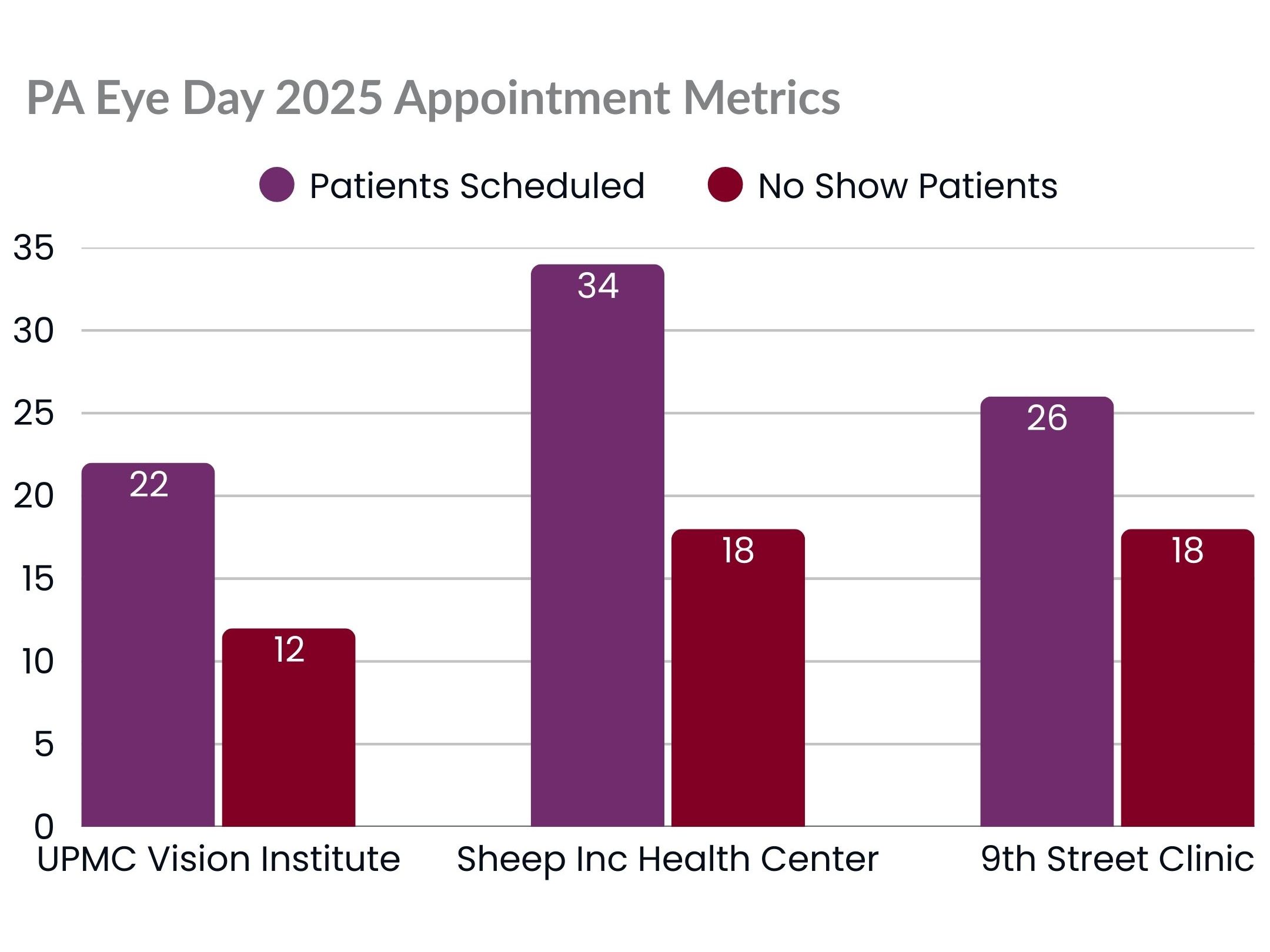
Screenings were conducted across three locations:
- The UPMC Vision Institute Urgent Eye Care Clinic
- Sheep Inc Health Center (Penn Hills)
- 9th Street Clinic (McKeesport)
This multi-site approach allowed us to reach both insured and uninsured populations while testing the scalability of teleophthalmology-supported screening workflows. At the 9th Street Clinic in McKeesport, patients were scheduled by their trusted providers at the Federally Qualified Health Center.
The screening model relied on:
- Ophthalmic technicians operating trial imaging devices as part of CORAP’s broader telehealth device evaluation strategy
- Standardized imaging workflows across all sites
- Real-time, remote image review by UPMC ophthalmologists
- Coordination of patient scheduling, triage, and follow-up care
This approach reduced the need for on-site ophthalmologists while preserving diagnostic quality and clinical oversight.
Challenges & Constraints
As with many preventive care initiatives, no-show rates posed a significant challenge. In Pittsburgh, attendance mirrored the statewide average of 50–60%, underscoring persistent structural barriers, such as transportation and healthcare access fatigue among diabetic patients.
Despite these constraints, the program was designed to rapidly identify patients requiring follow-up care, maximize clinical yield from patients who attended, and generate implementation data to refine outreach strategies.
Learning & Program Value
PA Eye Day reinforced several key insights that shape CORAP’s strategy:
- Teleophthalmology-enabled screening is operationally viable across diverse clinical settings
- Real-time remote interpretation supports timely referrals without compromising care quality
- No-show rates remain a major limiting factor, highlighting the need for more flexible, community-embedded screening models
- Device trials conducted in real-world clinical conditions generate critical data for long-term telehealth integration
These learnings directly informed CORAP’s broader remote access initiatives and ongoing refinement of mobile and community-based screening programs.
Outcomes & Impact
- 84 patients scheduled
- 45% successfully screened for diabetic retinopathy
- ~10% of patients screened were referred for prompt follow-up appointments
Screenings delivered at the 9th Street Clinic ensured uninsured patients received care at no cost, reinforcing equity as a core program principle.
 Portfolio