
When I stepped into my role as program manager for UPMC Community Ophthalmology & Remote Access Programs (CORAP), it became immediately obvious that if we wanted to improve patient access, scale our programs intentionally, and fully understand the barriers our neighbors are facing, we needed to gather our scattered metrics into a cohesive ecosystem.
Analyzing site-level trends across our dozens of partner locations has changed the way we deliver care. Every data point tells a story about someone navigating a system that wasn’t designed with their realities in mind. My job is to use those insights to build something better, just like it was when I reported user feedback for clients at REEA Global.
Consistently delivering quality care also allows us to build trust with our patients and community partners and collect earnest feedback that informs our clinic practices. We aim to scale with accountability by centering equity and building viable data collection processes, referral systems, and insurance support networks that actually help people.
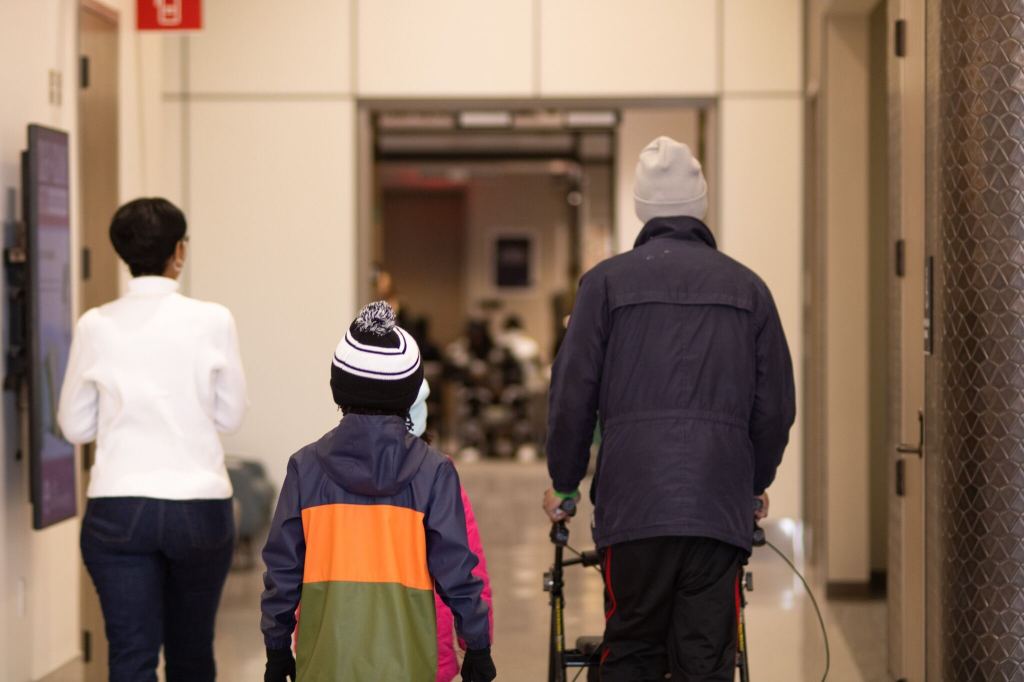
For example, when a partner site shows signs of increased community need, we adjust our clinic model to meet it; our original target with UPMC eyeVan mobile vision clinics was older adults, but the need for pediatric services became apparent as we embedded ourselves in Pittsburgh neighborhoods.
We hosted comprehensive pediatric mobile clinics for uninsured children referred from UPMC Children’s Hospital and offered pediatric services at the inaugural UPMC Community Vision Day at the UPMC Vision Institute. We also went beyond Allegheny County to meet community needs, facilitating a mobile clinic and large-scale glasses drive for students at Washington High School in collaboration with volunteers from Vision Services of Washington-Greene counties.
When we see follow-up gaps for referred patients, we intervene to identify the barrier to care and remove it to the best of our ability, such as scheduling the patient at a location closer to them or connecting them with resources like utility support and food/housing security organizations.
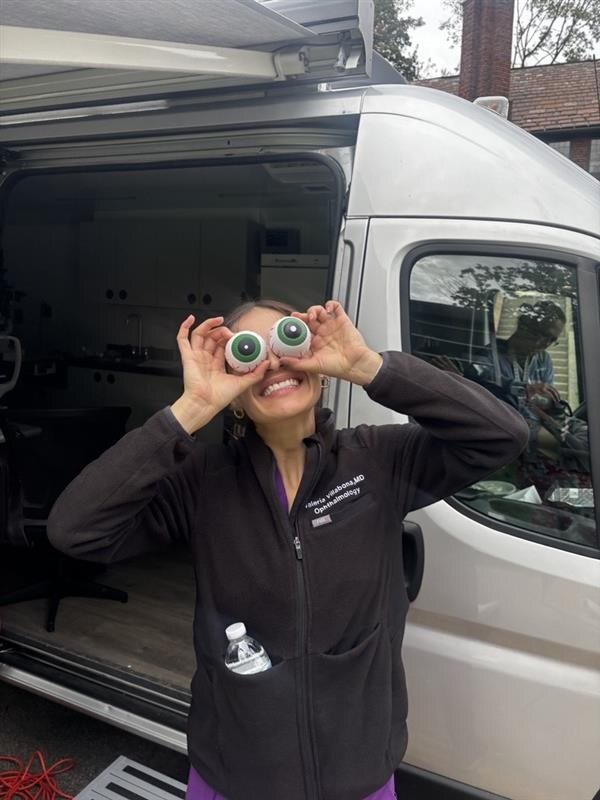
When insurance processes delay treatment, we record, escalate, and troubleshoot. For an elderly, uninsured patient referred from an early summer eyeVan clinic, my brilliant and compassionate colleague, Dr. Valeria Villabona-Martinez, facilitated insurance and Emergency Medical Assistance processes to cover his much-needed cataract removal surgery. He reported significantly improved vision after his latest post-op.
Often, eye surgeries that improve vision (despite drastically improving quality of life) are not considered emergent and therefore do not qualify for assistance; an unfortunate reality we hope to report on with research deliverables in the future. Why can’t restoring vision be considered a life-saving event?
This year, we streamlined metrics tracking across both the eyeVan initiative and the student-led Eyes On Wheels program, ensuring that every patient encounter, whether at a senior center, community health clinic, school, or resource hub, is captured and acted upon, if needed.
Via databases in Excel (fed by EPIC records and contextualizing our project planning documentation in Microsoft Loop), we now gather:
• Patient demographics
• Insurance metrics
• Clinical findings, referral details, and longitudinal follow-up outcomes
• No-show patterns and barriers to care identified through no-show survey data
Data, when used with intention, can become a tool of compassion. Streamlined, abundant metrics empower CORAP to deliver care that’s proactive and community-informed, not institution-centered. It also allows us to produce research deliverables for grant funders and health journals. The foundation we built in 2025 is already transforming the way vision care reaches our neighbors. And we are just getting started!

 Portfolio